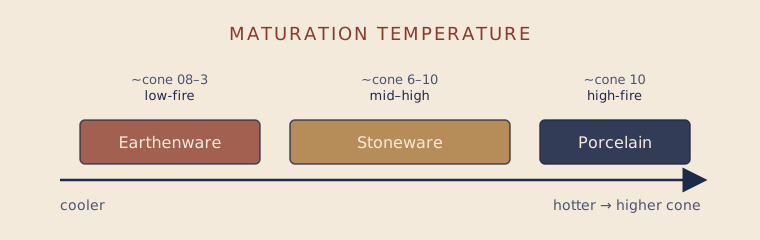
The three principal clay-body categories are distinguished primarily by maturation
temperature and resulting density. Edge cases exist (cone 6 porcelains, cone 6
earthenwares), but the table below reflects the conventional ranges used by suppliers
and studios.
The three clay families differ above all in maturation temperature.
Drop a photo here: raw clay or finished stoneware/porcelain (e.g. Unsplash “stoneware mug”)
LOW-FIRE
Earthenware
Porous · bright colour · beginner-friendly
A clay fired at low temperatures. Earthenwares do not vitrify at
these temperatures — particle bonding is by sintering, and the body remains
porous unless sealed by glaze.[Digitalfire]
Vitrification: dense, watertight once fully matured
Typical colour: light grey, buff, brown
Common use: tableware, mugs, bakeware, sculptural work
HIGH-FIRE
Porcelain
White · translucent · refined
Porcelain matures at the highest temperatures, developing a white, fine-grained,
often translucent body. Less forgiving than stoneware — softer when wet, more
prone to warping in drying and firing.
Maturation: Cone 8–10 (commonly), with high-fire formulations to Cone 12, 1250–1400°C (2300–2550°F)[The Ceramic School]
Vitrification: dense, often translucent when thin
Typical colour: white
Common use: fine tableware, sculptural work, technical ceramics